


Injury is a common part of the athletic experience, whether you’re racing for a personal best or working toward a championship. The initial choice to either push through or take a recovery break often sets the tone for how well you’ll respond to whatever situation your body throws at you next. Ultimately, if you’re not functioning at 100%, none of the other stuff really matters. So don’t shell out for a new pair of racing shoes and hope for the best – consider looking for specialized podiatry services to figure out what’s really going on.
The Case For Biomechanical Assessment Before Anything Else
Most running injuries aren’t bad luck. The yearly incidence rate sits as high as 79.3%, and it’s always the same structures taking the hit – the Achilles, the tibia, the plantar fascia. That’s not a coincidence. It’s because the same movement faults cause the same injuries, over and over. Excessive pronation overloads the medial column. A hip drop strains the IT band. Poor cadence hammers the forefoot.
That’s exactly what a sports podiatrist is looking for during a dynamic gait analysis Not standing on a pressure plate. Actually walking or running, under real load, the way your body moves when it’s tired and working hard. That’s when the faults show up. A lateral heel strike or an asymmetrical push-off will tell you more about why someone has developed plantar fasciitis than most imaging ever will.
The frustrating thing is that treatment too often jumps ahead of diagnosis. You can’t fix something you haven’t properly identified – and yet assessing movement under load remains one of the most overlooked steps in sports recovery. Get that part right first, and everything that follows tends to make a lot more sense.
Releasing Deep Tissue Tension That Stretching Can’t Reach
Foam rolling and stretching may help but will not effectively reach myofascial trigger points located deep in the calf complex or the intrinsic foot muscles. Trigger points are hyperirritable nodules within taut bands of skeletal muscle that limit the range of motion and create a “referred” pattern of pain or movement dysfunction in ways that make athletes feel constantly tight no matter how much they work on their mobility.
Dry needling involves inserting a thin solid filiform needle directly into the center of the trigger point which most times provokes a local twitch response which is an involuntary muscle contraction. This process effectively “resets” the neuromuscular junction, reduces the muscle band tone, and makes the muscle more pliable. It also causes your body to increase the release of vasodilators locally which in turn increases blood flow to the area. This brings the local oxygen and nutrient-deficient tissue.
Athletes suffering from chronic calf-tightness or nagging heel pain may see significant improvement through dry needling perth services employing intramuscular stimulation to achieve that goal of muscular relaxation and blood vessel dilation to feed undernourished tissue.
Using Shockwave Therapy For Injuries That Won’t Move
Some injuries follow a maddening pattern. The plantar fasciitis or Achilles tendinopathy flares up, you back off training, ice it, maybe take some anti-inflammatories, and the pain settles enough to feel like progress. Then you try to run again, and within a few sessions you’re back to square one – same ache, same stiffness, same frustration.
What’s happening at that point is often more than just lingering inflammation. When pain has been hanging around for months, the tissue itself starts to change. The collagen matrix inside the tendon begins to break down. The cells that should be repairing it stop functioning properly and start dying off. By the time you’d look at a biopsy, you wouldn’t see much inflammation at all – just disorganised, structurally compromised tissue that’s struggling to rebuild itself in any meaningful way.
That’s the problem with relying on rest and stretching alone once an injury has reached that stage. They’re not really addressing what’s going wrong at a tissue level. The new collagen that does form tends to be laid down in a weak, haphazard pattern – not the organised, load-bearing structure you actually need.
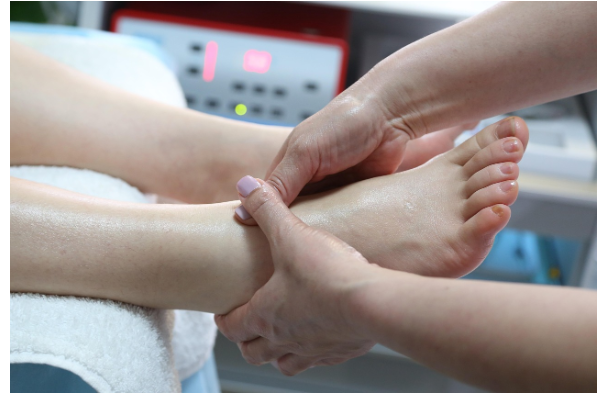
This is where shockwave therapy comes in. ESWT delivers high-energy acoustic pulses directly into the damaged area, which essentially provokes a controlled healing response – the kind of stimulus the tissue has stopped generating on its own. Collagen synthesis kicks back in, cell activity picks up, and growth factors start doing what they’re supposed to. It’s not a magic fix, but for injuries that have stopped responding to conventional treatment, it’s often the thing that finally gets them moving again.
Shifting From Reactive To Proactive Recovery
The most expensive thing athletes can do is wait for something to break before seeking the help of a podiatrist. By the time the pain is bad enough to make an appointment, there’s often an extra 6 weeks of compensatory movement patterns layered on top of the original problem.
Proprioception deficits, minor structural imbalances, early-stage tendinopathy – these are all things that can be detected before they turn into full-blown injuries. Adding a podiatric assessment on a schedule into a training cycle, especially when ramping mileage or intensity, gives athletes a real sense of their current tissue health. A podiatrist finding slightly tight Achilles in February looks very different from an athlete pulling up mid-race in April.
The athletes who recover the fastest aren’t necessarily the ones with the highest pain tolerance. They’re the ones who understand that tissue recovery is a physiological process with specific levers: blood flow, neuromuscular function, collagen remodeling, load distribution – and who use the right specialists to pull those levers at the right time.